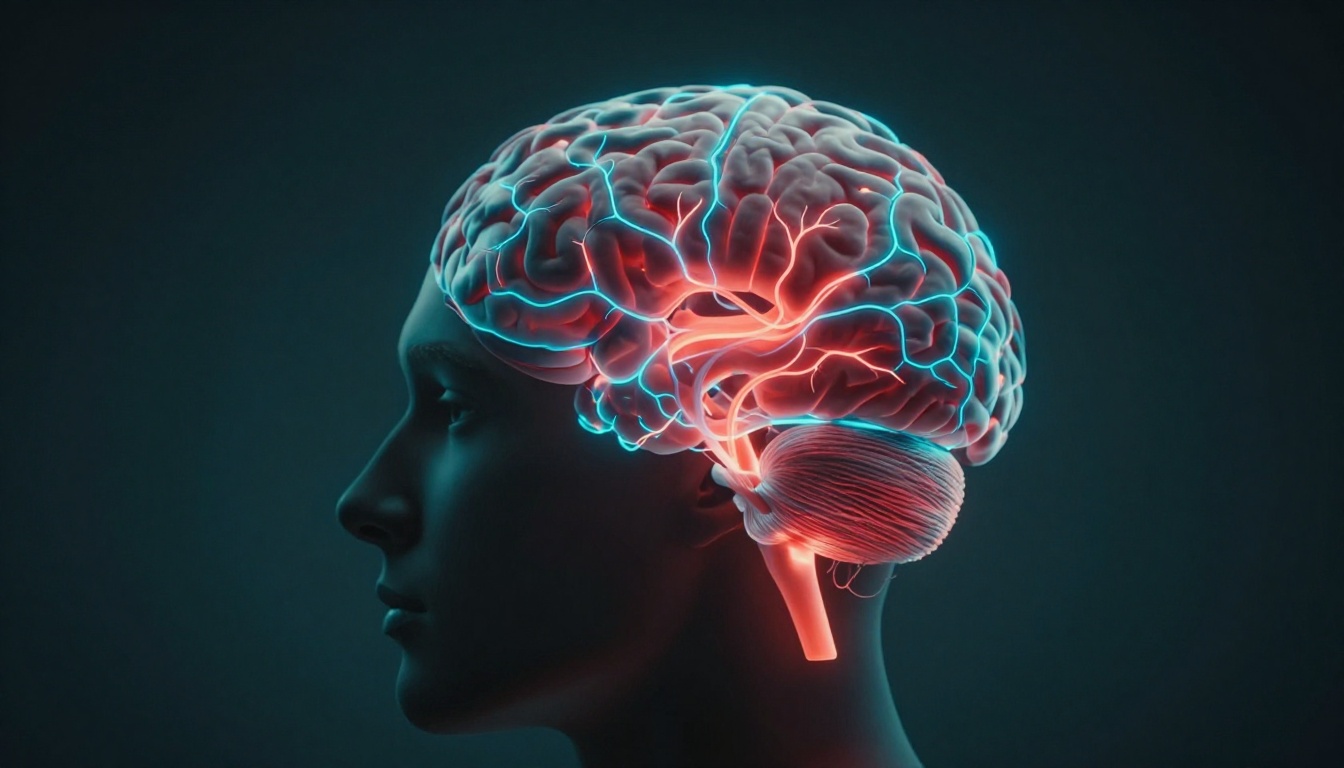
Have you ever felt fear hit your chest during a near miss while driving, then watched your heart race for seconds that felt like forever? That rush is your body’s fast response to a big moment. Emotions are your mind and body’s quick reactions to events, and they come with feelings, physical changes, and urges to act.
You might notice this most when stress piles up. Maybe you snap at someone, freeze during a hard talk, or spiral after bad news. Then you tell yourself to “calm down,” but your body keeps going. Understanding how emotions work can help you slow the reaction, choose a better response, and protect your sleep and mood.
In 2025 to 2026 research trends, scientists keep pointing to how emotions spread through brain signals and stress hormones, especially when stress stays high. At the same time, people report more worry, fear, and sadness, which makes the skills for handling emotions even more important. You’ll see how the brain spots danger fast, how the body follows, and why positive feelings matter just as much.
Next, you’ll learn the basics of what emotions are, including the common emotions people feel every day.
Spotting the Core Emotions We All Share
A lot of emotions feel messy up close. Still, your brain keeps a set of common “signals” for fast social reading. When you notice someone’s face (or your own body) shift in the same ways, that’s more than a guess. It’s pattern recognition built for daily life.
Scientists often point to universal facial cues, which show up across cultures. For a quick example, have you ever seen someone frown and instantly know something feels off? That reaction is your brain doing the work, even before you think.
In this section, you’ll learn two popular maps of core emotions. One focuses on faces you can spot fast. The other shows how emotions blend together, like paint colors mixing on a palette.

Ekman’s Six Basic Emotions Everyone Recognizes
Paul Ekman’s research popularized the idea that some emotions show up with distinct facial patterns. People across many cultures recognize these expressions quickly, because the face uses the same muscle actions.
Here are the six basics, along with the quick cue you can watch for in real life:
- Happiness: You see a smile, often with the cheeks lifting. A warm grin after good news is the classic example.
- Sadness: You notice a downturned mouth and a softer, heavy look. Tears often follow, especially when someone faces loss.
- Fear: Look for wide eyes and a stretched, open expression. It often shows up when someone spots danger or feels trapped.
- Anger: You’ll see tense features, furrowed brows, and a tight jaw. Someone can look ready to push back or defend themselves.
- Surprise: Eyebrows rise, eyes widen, and the mouth opens slightly. This shows up when something unexpected happens.
- Disgust: You’ll often see a wrinkled nose and upper-lip pull. Think of a bad smell or a gross taste.
Because these cues travel well, they help with quick communication. You don’t need perfect words to get the message. That’s why facial expressions matter in conflict, comfort, and even everyday banter.
If you want more detail on Ekman’s approach to universal emotions, see the six universal emotions overview. You can also read a simple breakdown of Ekman’s basic emotions at Paul Ekman 6 Basic Emotions.
Most importantly, recognizing these emotions improves your empathy. When you can name what someone likely feels, you stop assuming. You start responding with care, not just reaction.
A face can act like an early warning light. Learn the signal, and you’ll respond faster and kinder.
Plutchik’s Wheel: How Emotions Blend Together
Ekman’s list helps you spot clear emotions. Plutchik’s model explains what happens next. In real life, feelings rarely stay single-color. They blend, build, and fade depending on the moment.
Plutchik’s emotion wheel starts with eight primary emotions: joy, trust, fear, surprise, sadness, disgust, anger, and anticipation. Then it shows how they combine, like colors mixing on a wheel.
For example, consider how people describe love. They don’t just say “happy” or “safe.” Often, they mean a mix:
- Love = joy + trust
- Contempt or rejection-like feelings often show up as a mix around disgust and anger
- Hope-like emotion often feels like a blend of trust and anticipation
Opposites also matter in Plutchik’s model. Emotions across from each other can balance, shift, or cancel out. Joy and sadness sit on opposing sides. So when a person loses something meaningful, joy can dip quickly. On the flip side, comfort can bring warmth back, even if sadness still lingers.
Here’s a simple way to picture the wheel in your mind. Imagine each emotion as a section of a color wheel. When you move toward the neighbor, you get a new shade. That shade still has roots, but it’s not the same as the first color.
Using this model can sharpen everyday thinking. Instead of asking, “What are they feeling?” you can ask, “Which two feelings might be mixing?” As a result, your guesses get more accurate.
Also, Plutchik’s model makes emotion language easier for communication. You might not know the exact word for what you feel. Yet you can often locate a “closest match” and describe what’s nearby.
If you want an easy-to-use explanation of the wheel, check out Plutchik’s Wheel of Emotions on Six Seconds. You’ll see how the combinations work in plain terms.
Emotions blend because life blends. The wheel helps you track the blend without losing the core signal.
Key Theories That Reveal How Emotions Fire Up
Emotions don’t just pop into your mind. They ripple through your body, then back into your brain. These classic theories try to explain the order of events, and why the same body signals can feel different in different moments.

Before we break them down, think of emotion like a smoke alarm. You can ask, what triggers the alarm first, the smoke, the wiring, or the interpretation of the sound?
James-Lange: Does Your Body Create the Feeling?
The James-Lange theory says your body changes come first. Then your brain reads those changes as the emotion.
Imagine you spot a dog charging toward you. Your legs start to run. Your heart pounds, your palms get sweaty, and your breathing quickens. According to this view, you feel fear because your brain notices the fear-like body pattern already happening.
In other words, your body acts like the “instrument panel,” and your brain turns those signals into a feeling label. This fits everyday experiences too. When you’re out of breath from sprinting, you might feel “panic” because the body already looks like danger.
Pros (why people like this theory):
- It matches how fast body changes often start.
- It explains why physical states shape how intense emotions feel.
Cons (what pushes back):
- Some emotions can feel too fast or too specific to be only “body first.”
- Different emotions can share similar body patterns, so body changes alone may not explain everything.
For a broader overview of major emotion theories, see theories of emotion explained.
Cannon-Bard: Simultaneous Brain and Body Response
Cannon-Bard flips the timing. Here, the brain and the body respond at the same time.
Picture a near-miss while driving. Your thalamus (a key brain relay) signals the rest of the brain while also triggering body responses. So fear does not wait until your heart finishes pounding. Instead, your mind feels fear while your body reacts at once.
This model helps explain why you can feel “I’m scared” and “my body is bracing” together. It also supports the idea that your brain can run the show, even while your body is moving.
Pros:
- It accounts for the sense of immediacy (feeling and reaction arriving together).
- It keeps the brain central, not just the body.
Cons:
- It can underplay how thoughts and context shape emotion.
- In real life, body feedback and interpretation often mix, not cleanly separate.
Schachter-Singer: Arousal Meets Context
Schachter-Singer says emotion depends on two ingredients. First, you get physiological arousal. Second, you interpret what’s happening based on the situation.
So if your heart races, that activation is only half the story. At a party, the same buzz can become excitement. In a dark alley, it can become fear. The body provides the “energy,” and the mind provides the “meaning.”
This theory also explains why people can misread their feelings. You jog, your body heats up, and if you then bump into a stressful conversation, your brain might label the arousal as anxiety instead of exercise.
For a clear breakdown, check Schachter-Singer two-factor theory.
Pros:
- It explains why the same body state can lead to different emotions.
- It highlights the role of context and interpretation.
Cons:
- It can be harder to test for every emotion.
- Some fast emotional reactions may begin before you have time to “label” the situation.
As you move through these theories, notice the big theme: emotion is not one single event. It’s a sequence of signals, and the timing can shift depending on the moment.
Brain Spots and Body Signals Behind Your Emotions
When emotions hit, it often feels sudden. However, your brain and body usually run a quick set of steps first, then you experience a feeling second. Think of it like a smoke alarm plus a thermostat. One part senses trouble fast, and another part decides what to do next.
In a big moment, your body tries to keep you alive. Then your mind adds meaning. That mix explains why the same event can feel scary one day and manageable another day.

Amygdala: Your Built-In Alarm System
The amygdala acts like an alarm bell for danger. It scans incoming signals, especially ones tied to fear, threat, and high emotional meaning. When it detects risk, it pushes your brain toward fast action before you even fully think.
So, what does “fast” look like? Your amygdala can kick off a chain reaction that wakes up body systems tied to survival. Your heart speeds up, breathing changes, and muscles tense. You might also feel a surge of “I need to act now,” even if you cannot explain why yet.
This is one reason people describe an “instant” emotion. The fear response can start with automatic detection, not careful reasoning. Then, after the initial burst, other areas help you label what’s happening.
Research reviews describe the amygdala as a major player in emotion-related learning and threat responses, including how it shapes fear memory. For a science-backed overview, see Understanding emotions and the amygdala (PMC).
Also, modern brain imaging keeps sharpening the picture. Studies now focus on how the amygdala connects with control regions, especially when the emotion is unclear. For example, your amygdala may react to a half-smile that could mean warmth or trouble. Then regulation systems try to interpret it safely.
In simple terms, your amygdala helps you answer: “Is this dangerous enough to matter right now?”
Prefrontal Cortex: The Emotion Control Center
After the alarm sounds, your prefrontal cortex (PFC) helps you steer. It supports planning, attention control, and impulse management. In other words, it helps you decide how to respond, not just how to react.
When the PFC works well, you can calm down and choose a better path. Maybe you pause before you snap. Maybe you slow your breathing. Maybe you reframe the situation instead of feeding the fear.
However, when stress stays high, the PFC can lose some of its grip. Then emotional reactions last longer. You might notice this when you’re tired, overloaded, or already on edge. A quick threat signal turns into a longer mood because your brain struggles to switch from “alarm mode” to “control mode.”
Your emotions also depend on body signals, because hormones and arousal act like fuel. Adrenaline can speed up your heart and shift your energy into fight-or-flight. Meanwhile, the psychological side matters too. Thoughts, memories, and culture shape what the alarm means. The same tight chest can signal panic to one person and effort to another.
In recent years, researchers have used brain scans to study how PFC regions help regulate emotion under stress. Reviews describe the PFC as central to both generating and regulating emotional responses, including emotion control pathways. For a broader integrative view, see Emotion and the prefrontal cortex (PubMed).
Bottom line, emotions are not only about what you feel. They’re also about who gets to control the steering wheel once the body starts the engine.
Why Emotions Shape Your Daily Choices and Bonds
Emotions steer your day like wind in the sails. You might call it “gut feeling,” but it’s your brain running fast predictions. As a result, you choose, avoid, reach out, and pull back, often before you can explain why.

How emotions bias your decisions, even when you think you’re being logical
Your brain constantly runs a simple job: keep you safe and help you get needs met. Fear and worry often do the heavy lifting. They push you to avoid loss, delays, and uncertainty, even when the long-term payoff is better.
Research also shows that dread can hit harder than hope. When you imagine something going wrong, your brain treats it like a nearer threat. Therefore, you tend to pick safer, quicker options. You may skip the risky talk, postpone a healthier habit, or choose the “known” plan at work.
At the same time, emotions help you act with speed. Anger can signal injustice, so you may set boundaries or speak up. Sadness can reduce your drive to push, so you may seek support instead. Joy can widen your attention, making it easier to try new ideas. In other words, emotions don’t just color thoughts, they guide action.
A helpful way to think about it is this: emotions act like a scoreboard. They tell you what your mind thinks matters right now. Then your reasoning builds around that score, not from scratch.
You can see this idea in the way emotions shape communication and decisions, including in work like feelings-first communication and choices.
Why emotions strengthen (or strain) your relationships
Emotions do more than move you. They also move other people. A tense voice, tight shoulders, or a warm smile sends signals faster than facts. As a result, people react to your emotional “tone” even when you never say the whole story.
When you understand your own feelings, you also read other people with more care. For example, when someone looks withdrawn, it can help to ask, “Are they hurt, overwhelmed, or disappointed?” That shift from guessing to sensing can soften conflict. It can also make support more natural.
Empathy is one of the clearest bond builders. When you match someone’s emotion with kindness, the brain often treats the moment as safer. Then trust grows. Meanwhile, emotions like contempt or fear can drive distance, even if your intentions were good.
This matters in polarized moments too. Emotional intelligence skills can reduce harm and help people listen better during tense conversations. If you want a broader perspective, see emotional intelligence and healing divides.
Practical ways to manage emotional guidance without suppressing it
You don’t need to erase feelings to make better choices. Instead, you can train how you handle the signal. First, notice what your body is doing. Then, name the emotion in plain words. That simple step creates a small pause between stimulus and action.
Try these grounded moves during daily stress:
- Use a 10-second label: “This is fear,” “This is anger,” or “This is sadness.”
- Regulate the body first: slow your breathing or relax your jaw.
- Check the story: ask, “What am I assuming will happen?”
- Pick the next right action: send the message, take the break, or ask for help.
Also, think in “needs.” If anger is loud, the need might be respect or fairness. If sadness shows up, the need might be comfort or connection. If worry circles, the need might be clarity or support.
Here’s a short example. Suppose you feel dread before a meeting. Instead of canceling, you can choose a smaller step: write down your main point, then go. Your fear stays present, but it no longer gets the final vote.
If emotions steer decisions this much, your best strategy is not pretending they’re not there. It’s guiding them. Work that explains how emotions shape decision-making aligns with the same idea: feelings and context work together.
Next, you can apply these insights to recognize emotion patterns early and respond with more skill in real time.
Conclusion
Emotions are your brain and body’s fast system for noticing what matters, then pushing you toward a next move. You can see that work in the core emotion signals, in how theories explain timing, and in the way the amygdala flags threat while the prefrontal cortex helps steer back.
Because emotions also shape decisions and bonds, awareness pays off. When you recognize patterns early, you’re less likely to stay stuck in stress, and you can respond with more care instead of just reacting. Recent 2025 to 2026 research also points to body factors that carry over emotions, like how arousal and stress responses can stick around longer than expected.
Want to put this into practice today? Notice one emotion as it shows up, then journal one sentence about what your body felt and what you needed. If this helped, share it or drop a comment with the emotion you want to understand better.