
Two friends get stuck in the same traffic jam. One honks, yells, and grips the steering wheel like it’s a life-or-death test. The other puts on music and breathes, even if the line of cars never moves.
That pattern shows up everywhere. In arguments. At work under a tight deadline. In family drama after one comment lands wrong.
So why do people react differently to the same situation?
The answer is not that one person is “right” and the other is “wrong.” It’s that your brain interprets events through your past, your personality, your emotional system, and the people around you. When you understand that, you stop guessing and start making sense. You also get better at self-control, so you can respond instead of react.
Research backs up this idea. Stanford psychologists found that people’s motivations and emotional goals affect how much others can pull their feelings in a certain direction. In other words, the same moment can stir different emotions for different reasons.
Next, you’ll see what your past teaches your body to do. Then you’ll break down how personality shapes stress. After that, we’ll cover brain chemistry and coping styles. Finally, you’ll learn how your circle quietly sets the tone.
Your Past Experiences Shape How You Respond Today
When the same situation hits two people, their brains may “read” it through different memories. That happens because the brain links new events to past pain, past wins, and past threats.
Picture a car crash you never fully forgot. One person might freeze, then panic. Another might act calm, because their body already learned a “survive first” response. Later, the calm person still feels upset, but their first move is action, not alarm.
Also, your childhood can add background pressure you don’t realize you carry. If you grew up around chronic stress, your body might treat conflict like it’s normal. Then today’s argument feels urgent, even when it’s not. Stress can become a default setting.
Here’s a simple analogy: a scarred knee can make you flinch at a touch. The touch might be harmless, but the nerve memory says, “Pay attention.” Life works the same way.

Research also shows that memory can change how stress plays out in your body. For example, anger and emotion can serve a purpose when they help you move toward a goal. That’s why your “first emotion” might still make sense in context, even if it looks messy from the outside. For a deeper look at how anger can connect to goal pursuit, see anger’s role in attaining goals (PubMed).
So how do you spot your triggers?
- When something sets you off, ask what it reminds you of.
- Notice what happens right before you react (tone, timing, a certain phrase).
- Track patterns for a week, even if it feels annoying.
You don’t need perfect recall. You just need enough clues to predict your reaction next time.
The Lasting Impact of Trauma and Wins
Some memories don’t fade. They stay sharp. If someone has PTSD or anxiety, reminders can feel like danger all over again. A smell, a sound, or even a similar setting can trigger the body’s threat response. This is one reason some people seem “overreactive,” even though their nervous system is responding to past harm. For an evidence-based overview of unwanted trauma memories, see Understanding and Treating Unwanted Trauma Memories in PTSD (NCBI).
Other memories teach the opposite lesson. A positive past win can build confidence. If you’ve handled tough moments before, your brain may treat today’s challenge as survivable.
Even something small matters. Two friends bomb a class presentation once. One walks away saying, “I’m not built for this.” The other remembers how they recovered after one awkward moment. Later, public speaking fear might land harder for the first person, and confidence might land easier for the second.
Your past becomes a filter. Then your filter becomes your first response.
Personality Traits That Make Reactions Unique
Past experiences matter, but personality puts its stamp on your reactions too. Two people can share similar history and still respond in different ways.
Think about stress at work. An extroverted person may seek people fast. They might talk it out, ask questions, and move their energy outward. An introverted person might need quiet first. They may process inward, then speak clearly once they feel steady.
Emotional sensitivity is another layer. Some people feel everything at full volume. Others notice the feeling, then let it pass faster. Neither approach is automatically better. Yet each one changes how conflict looks in real time.
You can also think in terms of broad traits. Many researchers use the Big Five model to describe stable patterns like how anxious someone tends to feel or how much they prefer social activity. If you want a scientific view of how Big Five traits connect to distress, check Pathways Linking the Big Five to Psychological Distress (PMC/NIH).
Here’s a grounded way to test your own pattern. When job loss hits, one friend might cope by socializing and distracting themselves. Another might cope by isolating, planning, and studying options. Same situation. Different coping style.
Still, personality isn’t a fixed prison. It’s more like a lens. Your lens shapes what you notice, and that changes your reaction.

A quick self-quiz can help. When stress spikes, do you tend to:
- Fight (push back, argue, act fast), or
- Freeze (shut down, hesitate, go quiet), or
- Flee (avoid, escape, change topics), or
- Flop (give up, feel numb, wait it out)?
Your answers often match your trait pattern.
Extroverts, Introverts, and Emotional Sensitivity
In a group argument, one person may escalate by talking over others. Another may calm the room by choosing slower words and asking questions. The difference isn’t morality. It’s how each person manages emotion under pressure.
Extroverts may “talk down” stress by sharing it. Introverts may “think down” stress by reducing input. Meanwhile, emotional sensitivity can make feelings feel louder. One person might flare up quickly but recover fast. Another might brush it off, then feel hurt later in private.
Neither style is fake. Your nervous system has a default. Awareness helps you adjust that default before it adjusts you.
Brain Chemistry, Emotions, and Coping Styles in Action
Your reactions also depend on how your brain chemistry and emotion systems are currently tuned. That tuning changes from day to day, based on sleep, hormones, caffeine, workload, and mental health.
When anxiety is high, your brain reads threat faster. Small issues can feel like big danger. When depression is active, reactions can look flat or slow. That doesn’t always mean “nothing’s wrong.” Sometimes it means energy is low and emotion drains out.
Coping style matters too. Two people may both feel upset, but one chooses help, movement, or problem-solving. The other avoids the problem, scrolls, or stays in rumination. Over time, avoidance teaches your brain that the situation is unsafe, so your reaction gets stronger.
Here’s where emotional goals come in. Stanford research found that people’s motivations shape how much others can influence their emotions. If your goal is to feel calm, you may resist picking up someone else’s anger. If your goal is to feel justified or powerful, that anger can spread more easily. For background on that line of findings, see how people’s emotions are influenced by others (Stanford).

You can even see coping differences in simple moments. Same scary movie. One person laughs and feels thrilled. The other feels trapped and terrified. Their brains aren’t deciding the movie is different. Their bodies are having different alarms.
So what can you do when your reaction starts?
First, choose a “feeling goal.” You’re not trying to erase the emotion. You’re trying to steer it.
Then, pick one action that supports that goal. Small actions build a new path.
How What You Want to Feel Changes Everything
Try this before a tense moment. Ask yourself: “What do I want my next five minutes to feel like?” Calm might be the goal. Focus might be the goal. Clarity might be the goal.
When your emotional goal is clear, your brain has something to aim for. That goal can block emotion spillover from other people. It can also reduce the urge to match someone else’s intensity.
You can practice this in tiny ways:
- If you want calm, slow your breathing for 30 seconds.
- If you want clarity, write one sentence of what you need.
- If you want connection, prepare one kind line before you speak.
Coping Strategies That Build or Break Resilience
Healthy coping can change how strongly stress hits you. Movement helps some people, because it drains stress hormones. Talking with a trusted person helps others, because it turns chaos into a plan.
Unhealthy coping often feels like relief at first. Then it costs you later. Avoidance can stop the feeling today. Yet it can make the next trigger bigger.
A support system also matters. When you have steady people around you, your body learns, “I’m not alone.” That reduces the sense of danger.
You can’t control your brain chemistry all the time. But you can control what you do when your body is activated.
Social Cues and Your Circle’s Hidden Influence
People don’t react in isolation. They watch the people around them, then borrow cues for how to respond.
From a young age, kids learn emotion regulation by observing caregivers. If a toddler falls and the parent stays calm, the child often treats the fall as less of a crisis. If the parent panics, the child learns that the world is unsafe.
Research on family context and emotion regulation supports the idea that our environments shape how we manage feelings. For a scholarly review of how family context affects emotion regulation, see The Role of the Family Context in the Development of Emotion Regulation (PMC).
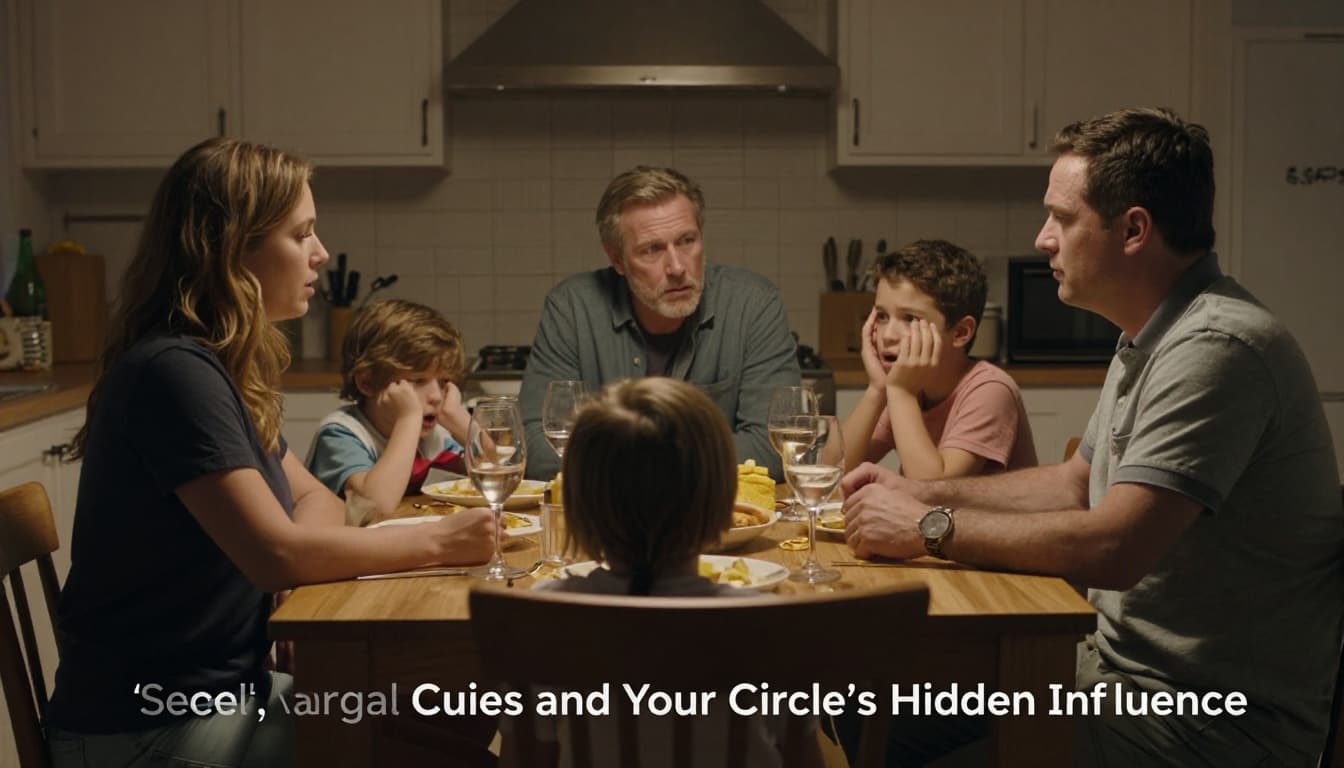
Your circle works the same way as a weather forecast. If you hang around calm people, you may feel steadier during conflict. If you spend time with constant tension, your body may get “trained” to expect problems.
Workplaces do this too. In one team, a crisis triggers problem-solving. In another, it triggers blame. Then you bring your personal history into that group setting. Together, they shape your reaction.
If you want to change your patterns, start with your inputs:
- Notice which people calm you down.
- Notice which people push your stress higher.
- Choose at least one steady support when things get hot.
Even one shift can change how your brain reads a situation next time.
Wrap-Up: Predicting Reactions, Not Judging Them
So back to the traffic jam. The honker and the music listener aren’t reacting “for no reason.” Their brains are using different maps.
Those maps come from past experiences, the traits you naturally lean on, the emotional goals and coping habits your brain learns, and the social cues around you. When you track those pieces, you can predict your own reactions instead of getting surprised.
Try one next step today. When stress hits, jot down what the situation reminded you of. Then ask what you want to feel, not just what you want to win.
And if you want a bigger shift, choose one steady person to talk to before you escalate. Empathy grows when you realize other people are also trying to protect themselves.
What’s one situation that always triggers you, and what does it remind you of?