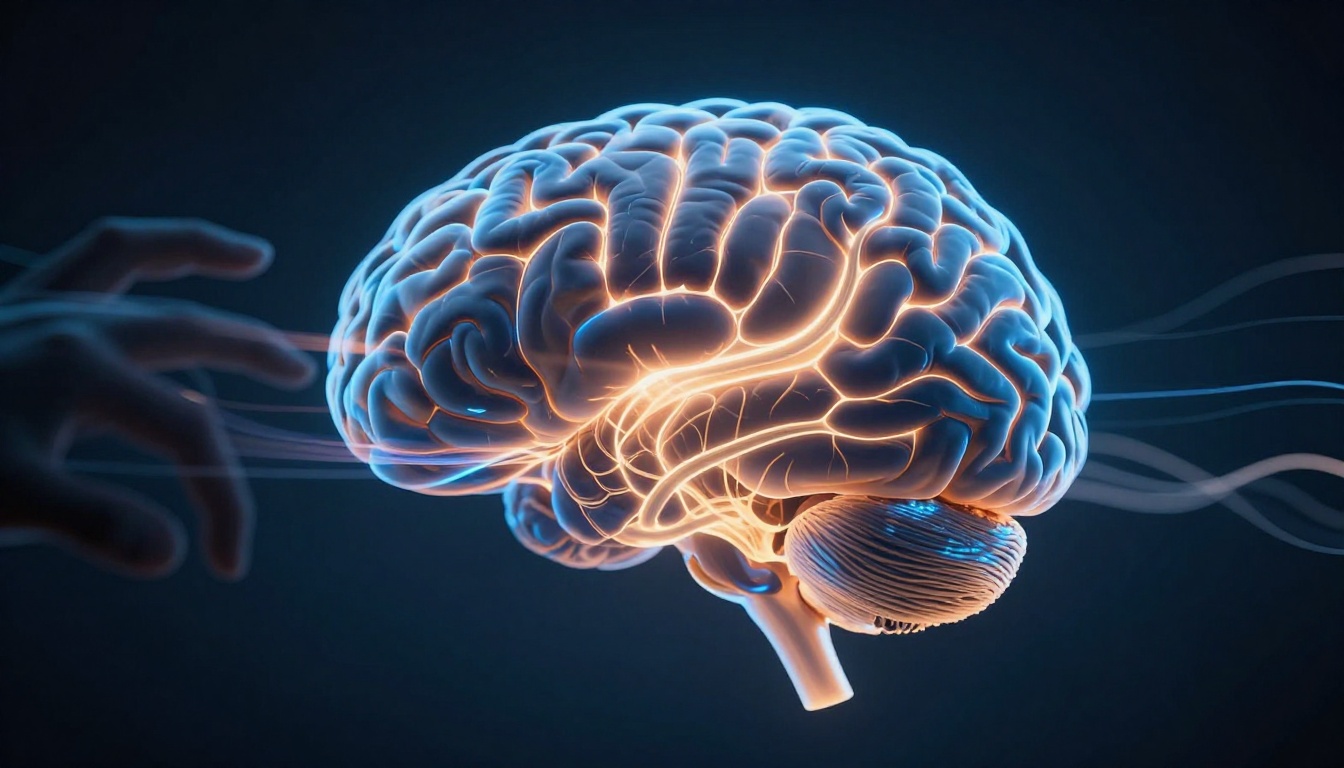
Grabbing a sugary snack is easy, even when you plan to eat healthier. One quick thought pops up, “This will feel good,” and your hand moves before you argue with yourself. That link between thoughts and actions is stronger than you might think.
Your brain doesn’t treat thoughts like harmless background noise. It uses them as signals. Then your body and habits follow those signals, often on autopilot.
The good news? That same wiring can change. In recent 2026 research on habits, neuroplasticity, and brain imaging, scientists keep finding the same pattern: repeated thinking and repeated actions shape what you do next.
In the sections below, you’ll see how your mind turns thoughts into behaviors, plus real-life examples of it happening. You’ll also learn common traps that steal control, and simple steps you can try today to train new thought-action habits.
The Brain Science Explaining Why Thoughts Trigger Actions
Thoughts and actions connect through the brain’s learning system. When you repeat a choice, your brain treats it like a “shortcut.” Next time, you don’t start from scratch. You mostly replay the same decision path.
Imagine your brain as a forest trail. The first time you walk a route, it’s narrow. With use, it becomes wide and easy to follow. Thoughts work like that. If you keep having the same thought before an action, the trail gets wider.
Recent 2026 work on neuroplasticity and habits points to two key ideas: repetition and brain rewiring. Repetition builds faster routes. Rewiring strengthens the parts that support healthier decisions.

If you want a clear example of how training the brain works through practice, this Stanford Parkinson Association blog post summarizes that “train your brain” message using neuroplasticity and consistent exercise. It’s a practical read, even if you’re not dealing with Parkinson’s: neuroplasticity and exercise.
Action Repetition Bias: The Habit Shortcut in Your Head
Sometimes you stick to a choice even when a better option shows up. It happens more than you’d expect, and it often feels like you’re choosing freely. In reality, repetition can tip the scales.
A large study covered 15 datasets with over 700 participants. The main takeaway: action repetition can bias what you prefer later, even in new situations. In other words, you can start valuing an option just because you tried it before. That shift can happen without you doing a careful, rational comparison.
Think about shopping. You might buy the same brand of cereal for years. Then a store offers a healthier choice with better value. You may still reach for the familiar box. The thought that “my usual is fine” hits fast, and your brain treats familiarity as safety.
This is why it feels like willpower is the only tool. You try to “decide harder,” but your brain already built a shortcut. The choice feels automatic, not weak-willed. Your brain learned a route. Now it wants to reuse it.
For more details on this kind of bias, see action repetition biases choice in context-dependent decision-making. The language is more academic, but the point is simple: past repetition can outweigh fresh evaluation.
Neuroplasticity: How Thinking Actually Changes Your Brain
Neuroplasticity means your brain can change its structure and function based on experience. You’re not stuck with one “set” way of thinking. However, change usually requires repeated input, not passive wishing.
Here’s a concrete example from 2026 research on exercise. In one study, 130 adults did two 60-minute workouts weekly, plus home exercise, for about a year. MRI scans suggested their “brain age” shifted closer to about 0.6 years younger on average, while a comparison group showed a smaller shift. The results also tied to areas important for memory and learning, like the hippocampus.
So what does that have to do with thoughts? When your brain improves its decision-related systems through activity, your thinking becomes easier to shape. Plus, positive self-talk can guide attention toward the next helpful step.
Now, add another layer: your gut and brain don’t work in separate rooms. There’s growing evidence for a brain-gut connection. One 2026 paper focused on the brain-gut-muscle axis, explaining how movement can influence brain aging through pathways that include gut signals. If you want the science thread, read: brain-gut-muscle axis (exercise and brain aging).
In plain terms, this means your “thought training” gets help when your body supports it. Movement and better inputs make it easier for new habits to stick.

Cognitive Behavioral Therapy Basics for Thought Control
Cognitive Behavioral Therapy, or CBT, gives you a method for changing thoughts that drive actions. It’s not about “positive thinking” all the time. It’s about noticing unhelpful thought patterns and testing them.
A simple CBT loop looks like this:
- Spot the thought that pushes an action
- Challenge it with evidence (or a more balanced view)
- Replace it with a thought that leads to a better choice
For example, say you think, “I always fail.” That thought often leads to avoidance. You don’t try, so “failure” feels confirmed.
A CBT reply could be: “I’ve failed before, but I can start small.” Then your action changes. You do the first step instead of skipping the task.
In 2026, some apps make CBT easier by giving structure and repeat practice. If you want a place to compare tools, this guide covers options and what they focus on: CBT apps to retrain your brain.
Even without an app, the CBT idea works. Thoughts don’t just predict actions. With practice, you can train a new prediction.
Everyday Examples of Thoughts Turning into Real Behaviors
Thought-action links show up in daily life, not just in lab studies. You can see it in eating, focus, shopping, and self-talk.
Start with food. If your mind says, “I deserve a treat,” then stress might become permission. You may not notice the pattern right away. Later, you might wonder how you ate more than planned.
Then there’s the opposite pattern, where a thought creates restraint. You might think, “I want energy for the rest of the day.” That single sentence can shift your next move. You still crave sugar, but you pause long enough to choose fruit or yogurt instead.
Kids show it too. A child who thinks, “Focus now,” can handle a homework task for longer. Another child who thinks, “This is too hard,” may give up quickly. Both kids might be smart. The thought just changes which behavior they repeat.
For people with ADHD, the thought-action link can feel extra strong. Many struggle with impulse and shifting attention. CBT-based tools often help by teaching people to notice the thought that sparks action, then choose a different next step. The aim isn’t to erase ADHD. It’s to reduce how often thoughts automatically win.
And there’s a darker example: brain inflammation and food choices. 2026 research has explored how brain immune activity and inflammation might connect with ADHD-like symptoms. It also links early stress and some diets to more inflammatory food preferences. In real life, that can mean the “I want junk now” thought gets reinforced by the body’s state. Then the loop tightens.
Finally, consider sleep and mood. If your brain keeps thinking, “I’m behind,” it can raise stress and make it harder to plan. That stress can push late-night scrolling and missed workouts. Thoughts shape the next hour. The next hour shapes the next day.
Most importantly, these patterns include hope. Thoughts influence actions, but actions also influence thoughts. Once you pick a better behavior, your mind gets new evidence. Then your thoughts start changing too.
Common Traps That Let Negative Thoughts Steal Your Control
Negative thoughts often feel true because they repeat. But repetition can trick you into treating an old story as a fact.
One trap is the repetition blind spot. Your brain might keep choosing the same snack, the same app, or the same procrastination plan. Then it stops updating. You may miss better options because you’re following an old trail.
Another trap is over-trusting advice that can sound confident. In 2026, AI chatbots and mental health apps are everywhere. They can help some people. Still, if you rely on them as your only support, you can worsen problems. For example, tools that respond without knowing your full history could push the wrong interpretation. That’s why choosing tools carefully matters, including privacy and safety. For a survey of AI mental health apps and what to watch, see: AI mental health apps in 2026.
Then there’s the body side. If gut health, sleep, and inflammation stay off, your brain gets less space for good decisions. A thought like “I can’t stop” can feel real when your energy is low. In other words, your brain might not be lazy. It might be overloaded.
Some people also skip tracking. If you don’t note when your thoughts hit, you can’t see the triggers. Stress, boredom, certain foods, certain times of day. These patterns hide in plain sight.
Here’s the hidden gotcha: negative thoughts steal control because they shrink options. They make you think, “This is the only way.” Your fix is simple, but not easy: expand options by changing what happens right after the thought.
Easy Steps to Train Thoughts for Positive Actions Today
You don’t need a perfect mindset. You need a repeatable process. The steps below train the thought-action link using repetition, small wins, and quick CBT swaps.
First, focus on one habit at a time. Next, keep it small enough that you can do it even on a bad day. Then your brain gets proof that the new trail is real.
Try this sequence:
- Pause for 10 seconds when a trigger hits.
- Name the thought (one short sentence).
- Question it: “Is this a fact, or a habit?”
- Choose one action that fits your goal.
- Repeat daily, even if you miss some days.
- Write one line about what happened (so you learn fast).
Now expand those steps with three high-impact moves.
Spot and Break Your Automatic Repeats
Your first job is noticing the thought that drives the action. You can’t change a pattern you can’t see.
When you feel the urge, ask one tight question: “Is this old habit, or best choice?” Say it in your head like a signal. Then get curious, not harsh.
Journaling makes this easier. Write two lines after your choice:
- What I thought right before
- What I did next
After a week, you’ll see triggers. Maybe it’s after lunch. Maybe it’s when you’re tired. Maybe it happens when you’re stressed and your brain reaches for comfort.
Then you can start breaking the link. For example, if the thought is “I deserve a treat,” your action might be “take a 5-minute walk first.” The thought may still show up, but it won’t automatically steer you.
Build Brain Power with Movement and Kind Self-Talk
Movement boosts neuroplasticity-related systems. Positive self-talk can also reduce fear and help you stick with change.
Aim for 30 minutes of exercise daily, or most days. It can be a walk, biking, or light strength work. The goal is consistency, not intensity.
Then pair it with a simple sentence you repeat during or right after. Something like, “I make smart choices.” Keep it believable. Kind self-talk works better than harsh pressure.
Why this combo works is straightforward. Exercise changes your brain’s learning conditions. Kind self-talk changes your emotional conditions. Together, they make new habits easier to repeat.

If you want a simple “thought-to-action” example, use this: you think, “I’ll do just one song on the treadmill.” Then you start. One action turns into momentum. Momentum turns into a new thought, “I can do more.”
Use Quick CBT Swaps for Instant Shifts
CBT works best when it’s fast. You don’t want long debates in your head. You want a quick swap that guides your next step.
Pick one common negative thought. Use it often enough to recognize it in real time. Then write a replacement thought that leads to action.
Here’s a quick template:
- Thought: “I always fail.”
- Replacement: “I can start small today.”
- Action: “Do the first 3 minutes now.”
Another example:
- Thought: “This is too hard.”
- Replacement: “I can break it into steps.”
- Action: “List the first two steps.”
If you like apps, CBT tools can help you practice these swaps until they feel automatic. Since you’re training repetition, you want exercises you’ll actually use. The app list in this guide can help you compare options: CBT apps to retrain your brain.
Also remember: if an “AI suggestion” feels off, don’t treat it like truth. Use it as an idea, then choose what matches your real life. When you get support from people or professionals, it adds safety.
Conclusion
Your thoughts influence your actions through a mix of repetition and brain change. When you keep thinking the same message, your brain builds shortcuts. Then behavior follows, often before you notice.
The most hopeful part is that your brain can learn new paths. Repetition bias can keep you stuck, but neuroplasticity and CBT tools can help you shift the loop. Even small daily actions matter, especially when you pair them with kind, realistic thoughts.
Start today with one technique. Choose a focus zone, a 10-second pause, or one CBT thought swap. Then track what happens over the next week.
If your first week feels messy, that’s normal. Your brain learns through practice, not perfection. And the next thought is already an opportunity to choose a better action.