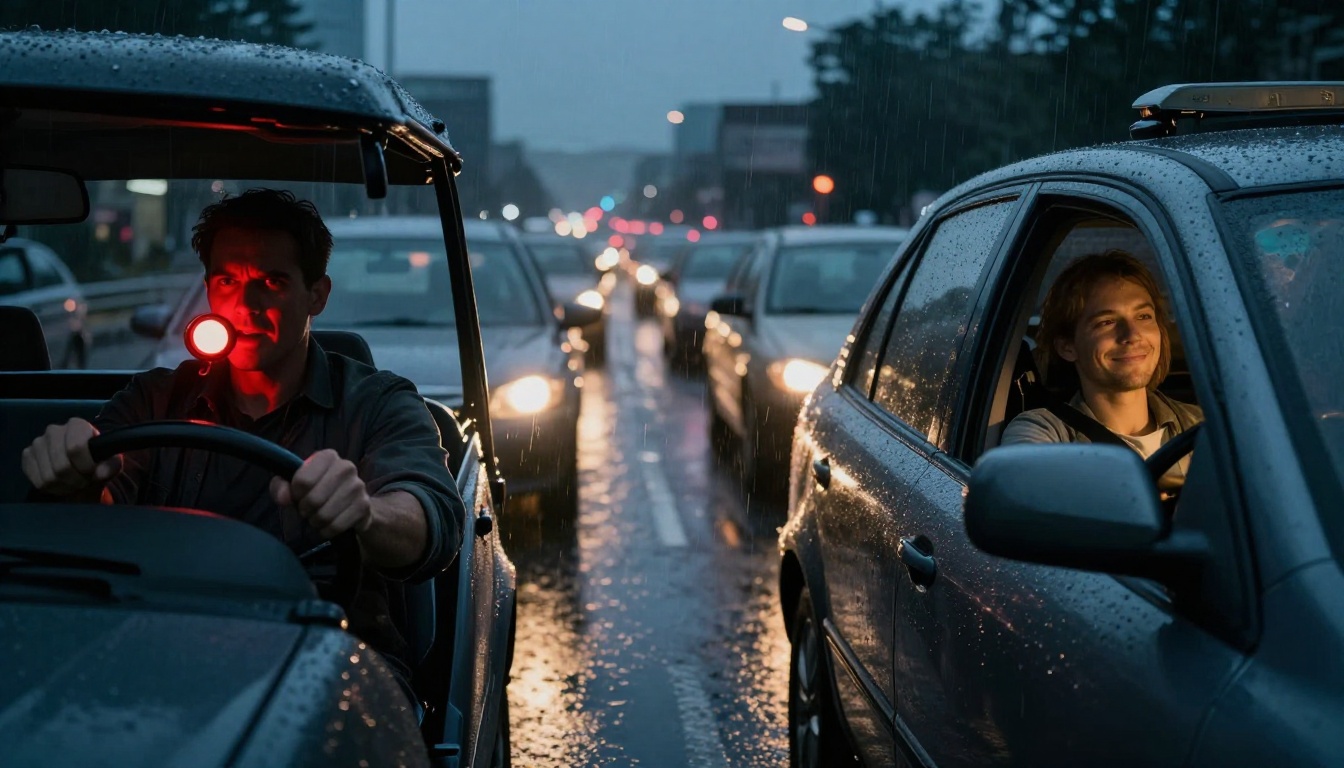
Picture this: two friends hit the same traffic jam. One honks, taps the wheel, and gets louder by the minute. The other puts on music, breathes slower, and plans the next stop.
Same road. Same delay. Very different behavior.
That puzzle is more than curiosity. When you understand why people respond differently in similar situations, you start making better guesses about yourself too. You also get more patient with others, which helps relationships and decisions.
Research from 2024 to 2026 keeps pointing to a simple truth: behavior usually comes from a mix. Psychological factors (emotions and habits) steer your first impulse. Social factors (norms and peer pull) shape what feels acceptable. Environmental and biological factors (safety, stress biology, health) change what you can handle. And cognitive factors (beliefs, planning, self-efficacy) decide what you do next.
Now let’s make those pieces feel practical, not abstract.
How Your Emotions and Habits Shape Your Reactions
Emotions act like a fast alarm. They don’t just color your mood, they change your next move. If you feel fear, your body often pushes you toward withdrawal, freezing, or getting “small.” If you feel joy or confidence, you may move toward action, humor, or problem-solving.
Habits then take over the steering wheel. Even when you learn a new approach, habits can win. They run on autopilot, especially under stress.
A useful way to think about it is this: your brain has “default settings.” In a traffic jam, one person’s default is anger and control. Another person’s default is distraction and self-soothing. Both are learned. Both can be changed, but not by willpower alone.

Research linking emotions and later action often finds a pattern: feelings today help predict behaviors tomorrow. For example, when people repeatedly expect negative outcomes, they tend to plan more. When people feel positive, they may not prep as hard. That doesn’t mean “good vibes” are useless. It means emotion often guides what you think will happen next, and what you do to avoid risk.
Habits can also form from small rewards. If staying busy online helps you calm down for five minutes, your brain learns a shortcut. If complaining helps you feel seen, that too becomes a routine. Over time, two people can face the same situation, but each follows a different shortcut.
This is where one theory helps explain the puzzle. A classic cognitive-affective view of personality argues that people differ in how emotions and beliefs are activated by situations. In other words, the same event can “turn on” different internal steps. See a summary of that system-level thinking in Mischel and Shoda’s cognitive-affective theory.
Emotions That Push You One Way or Another
Strong emotion is a filter. It decides what your brain notices. It also changes your body’s speed.
Think about stress. When stress spikes, some people freeze. They get quiet, stare, and struggle to act. Other people get wired. They speak fast, interrupt, or try to fix everything right now. Both respond to the same emotion, but the body’s threat signals create different coping styles.
Joy can do the same thing, just in reverse. Excitement might make someone jump in, volunteer, or make jokes. For another person, excitement can create overwhelm. They may talk less and watch longer.
The key takeaway here is simple: emotions don’t only make you feel different. They make you act different.
Stuck in Old Habits or Ready for Change
Most behavior change fails for a boring reason: the habit loop still pays off.
In many 2024 findings, knowledge doesn’t automatically beat habit. People can understand what to do, but their routine still fires first. Then the person rationalizes the choice after the fact.
This shows up in everyday life. One person stays calm in conflict because they trained calm responses. Another person escalates because anger used to work, even if it caused damage later.
Screen habits add another layer, especially for young people. 2026 reporting points to “screen isolation” patterns, where heavy phone and app use reduces real-world connection time. When someone feels lonely or anxious, their go-to routine can shift. That can make emotional differences show up faster, and make coping feel more automatic.
So how do you spot your pattern without judging yourself?
Try this simple habit check:
- Name the emotion first (don’t fix yet).
- Notice the first impulse (the one you act on within 10 seconds).
- Track the reward (what did that action give you, even briefly?).
The goal isn’t to control every feeling. It’s to catch the autopilot early.
The Pull of Friends, Family, and Group Rules
Even if your emotions and habits are strong, social cues can still steer you. You don’t live alone. You read rooms, not just traffic lights.
Group rules can act like invisible instructions. Some rules are spoken. Many are not. For example, a friend might recycle because it’s “what we do.” Another group might treat recycling as awkward or pointless. When you join a group, you borrow its shortcuts.
A 2024 to 2026 thread in youth research keeps showing a split role:
- Best friends often shape hidden parts of behavior, like emotional struggles and rule-breaking.
- Popular peers often shape visible habits, like social media engagement or weight-related worries.
One way this happens is through norms. A norm is what feels normal in that group. When enough people seem to agree, your brain treats it as safe to follow.
Newswise coverage in 2026 draws attention to exactly this split, pointing out how different peer types shape different behavior targets. Read more in best friends vs popular peers.

At the same time, group life can also protect people. Supportive family members can slow down panic. Friends can remind you to breathe. In tough moments, trust can turn “I can’t” into “I’ll try.”
Meanwhile, isolation can remove that brake. If someone spends less time with caring people, their emotion regulation can get weaker. Then risk behaviors can rise, not because the person wants harm, but because the coping options shrink.
What Your Group Expects Guides Your Moves
If you’ve ever felt the urge to copy someone’s reaction, you already know how norms work.
When everyone in a room waits their turn, you wait. When everyone posts jokes about a situation, you post too. When a group panics during a crisis, the panic spreads like heat.
Research on adolescence and norm formation supports this. For instance, an open-access Scientific Reports study highlights how the norms of majority and popular peers shape adolescents’ personal norms. Those personal norms then guide later choices. See majority and popularity effects on norm formation.
Here’s the practical lesson. When you want kinder behavior, don’t only change your mood. Also change the group cues around you.
Try asking, quietly:
- “Who do I feel safe copying?”
- “Which group signals help me act better?”
- “What do I do when I’m alone, with no audience?”
If your answers are tough, you’re not broken. You’re just seeing how powerful norms are.
Support Networks That Boost or Block Action
Family and friends can either buffer stress or amplify it.
Support looks like:
- checking in when you seem off,
- offering a calm plan,
- staying kind when you mess up.
But support can also block action when it turns into pressure. If loved ones react with shame, you may avoid trying. If they react with constant control, you may rebel.
A better goal is “trusted coaching.” That means someone helps you stay human, then helps you choose a next step.
In 2026, many mental health teams and school programs focus more on relationship-based support. The underlying idea is straightforward: trust changes behavior. People act differently when they believe they’ll be heard, not judged.
You can use this without waiting for big changes. In your next difficult moment, consider sending one message to someone safe. Keep it simple:
- “I’m stressed. Can you help me pick one step?”
Why Your Surroundings and Body Basics Change Your Choices
Sometimes people don’t behave differently because of attitude. They behave differently because of context and biology.
Your environment can make certain actions easier. It can also remove options. If a bike path feels safe, cycling becomes an obvious choice. If the area feels unsafe, your brain flags danger and pushes caution. The “same situation” is never truly the same when the body feels different threats.
Biology also sets the baseline. Stress hormones can shift attention. Sleep can change patience. Hunger can make conflict more likely. Health differences can alter how fast someone can recover.
Post-pandemic anxiety adds another factor. 2024 to 2026 summaries often connect lasting anxiety to genetics and how people react to crowds. In other words, some people have a higher vulnerability. Then real-world stressors, like crowds and social pressure, push the anxiety up.
There are also strong findings linking obesity and mood. When loneliness and obesity overlap, the risk of mental health problems rises. That matters because mood can shape behavior even in normal places like stores, schools, or workplaces.

Easy Access or Barriers in Your Environment
Your environment can act like a volume knob.
If someone has:
- clear signage,
- safe lighting,
- fast routes,
- supportive tools,
then their courage and planning rise. They don’t need to fight fear as much.
In contrast, when barriers stack up, the brain spends energy on threat scanning. That makes other tasks feel harder. As a result, you often see shorter tempers, slower decisions, or avoidance.
A small example:
- Two coworkers get the same deadline.
- One has help and quiet space.
- The other has constant interruptions and noise.
The second person doesn’t just “care less.” Their surroundings push them toward stress coping. That can look like confusion or irritability.
Your Body’s Built-in Responses
Your body speaks in signals. Stress biology is a big one. When your nervous system senses threat, it changes how you interpret the world.
Some people get wired under stress. They might talk more, move faster, and demand immediate action. Others get quiet. They pause, shrink, and avoid.
Genetics can influence anxiety baseline. 2024 to 2026 summaries report that anxiety can run in families, with some studies estimating large portions of stable anxiety tied to genetic factors. Then crowd exposure adds pressure.
So if you wonder why someone reacts more intensely at a busy event, it might not be a “choice.” It might be a stress system that turns on faster.
Even at a wider scale, biology and environment can interact. For a sense of how traits and conditions can shape response over time, see biological traits and response patterns. The takeaway still fits daily life: your “starting state” changes what the same environment triggers.
Different Ways of Thinking Lead to Unique Paths
If emotions are the spark and habits are the autopilot, thinking is the steering wheel.
Cognitive factors include your:
- skills (what you know how to do),
- self-belief (what you think you can handle),
- planning style (do you map steps, or act first?),
- attention habits (what you focus on under stress).
A big point from 2024 reviews is that knowledge alone often doesn’t change outcomes. Self-efficacy tends to matter more. Self-efficacy means “I can do something.” When people believe they can handle a moment, they search for steps instead of freezing.
In 2026, AI use also shapes thinking patterns for many kids and teens. Some students start relying on AI to produce answers fast. That can reduce effort and slow down “first-draft thinking,” where you learn by trying. Teachers report students may enter “passenger mode,” doing less mental work because the tool does it first.

Belief in Yourself vs. Going on Impulse
Two people can feel the same emotion, but still act differently because their beliefs differ.
If you believe you can handle a tough conversation, you might speak carefully and stay on topic. If you believe you’ll mess up, you might avoid the talk, snap, or agree too quickly.
Impulse is often the result of a short plan. When the brain doesn’t see a clear next step, it reaches for the fastest option. Sometimes that option is anger. Sometimes it’s scrolling. Sometimes it’s switching topics mid-argument.
So the question isn’t “Why didn’t they control themselves?” The question is, “Did they have a plan?”
One way to change behavior is to build plans in calm moments. Then, when emotion rises, you have a script ready.
AI and Modern Tools Reshaping How You Think
AI tools can help with brainstorming. They can also reduce mental effort if they replace thinking.
A Microsoft Research report from 2025, based on a survey of knowledge workers, found people often self-report reduced cognitive effort and confidence when using generative AI for tasks. That doesn’t prove AI is harmful in every case. It does show a pattern worth watching: when the tool handles the heavy lift, your sense of ownership can drop.
Read the report on generative AI and critical thinking.
This connects back to self-efficacy. When you do your own first steps, you grow confidence. When you skip them, confidence can shrink. That can change how you respond later, especially in school, work, and stressful social moments.
If you want a practical way to use AI without losing your thinking muscle, try this rule:
- Use AI for questions and options.
- Use yourself for the final choice.
Then you keep the cognitive skills that carry over to real life.
Conclusion: The Mix, Not the Mystery
People don’t behave differently because they’re “random.” They behave differently because systems inside and around them respond in unique ways. Emotions and habits create the first impulse. Social norms and support shape what feels safe to do. Environment and body basics change what’s possible. And thinking patterns decide which action wins.
One strong takeaway stands out: the fastest “fix” often isn’t a mood change. It’s a structure change. Better access to safe spaces, better support groups, and better tools can shift behavior more than forcing willpower.
If you want to see this in your own life, pick one recent moment where you reacted strongly. Then ask:
- What emotion came first?
- What habit moved next?
- What social cue pushed it?
- What physical context and beliefs made it feel right?
Then try one small tweak this week. Maybe you’ll text a supportive person. Maybe you’ll change your route. Maybe you’ll plan your next step before the stress hits.
And if you’re willing, share your story in the comments. What situation looked the same, but felt totally different inside?